SPIRITUAL PROSPERITY WORLD

Spiritual Prosperity World
MONTHLY NEWSLETTERS

September Newsletter 2024
Artificial Intelligence (AI) solutions
Learn how HPE (Hewlett Packard Enterprise) and NVIDIA unlock AI
AI is everywhere, disrupting every industry and creating limitless opportunities. HPE and NVIDIA are collaborating to deliver co-developed solutions to help you accelerate the adoption of generative AI.
People
Work with experts and develop new skill sets
Technology
Accelerate AI deployments and protect from risks
Economics
Optimize AI costs long term
HPE and NVIDIA are collaborating to deliver co-developed enterprise AI solutions and joint go-to-market integrations to assist businesses in streamlining the development and deployment of AI applications from pilot to production.

Accelerate your path to production AI with a turnkey full stack private cloud. Part of the NVIDIA AI Computing by HPE portfolio, this co-developed scalable, pre-configured, AI-ready private cloud gives AI and IT teams powerful tools to innovate while simplifying ops and keeping your data under your control.
Instant AI productivity
Unify access to all your data
Enterprise-grade confidence and control
Cloud experience that keeps data private
AI use cases
Virtual Assistants
Deploy chatbots for seamless customer support.
Automation
Deploy AI driven event and incident management.
Content and Product Creation
Rapidly create and produce content for an insights-driven, customizable customer experience.
Architect an AI advantage
Overcoming overconfidence and oversight to help leaders secure long-term business success.
9 in 10
organizations have an official AI strategy in place
94%
of IT say AI has increased their security risks
80%
of IT leaders are currently running their AI models on infrastructure they manage
Accelerate your journey to AI at scale
HPE GreenLake cloud
Looking to make AI work for you? HPE GreenLake cloud gives you supercomputing access to power AI at scale.
HPE Financial Services
Our collaborative approach delivers asset management solutions that free up capital and maximize capacity while driving sustainability.
ChatGPT


Motivational Quote
“I do believe I am special. My special gift is my vision, my commitment, and my willingness to do whatever it takes”: Tony Robbins
Spiritual Prosperity World
For more info, visit: https://www.spiritualprosperity.world
to receive my free gift – “How to Create a Success Mindset: 10 qualities of a successful entrepreneur checklist, plus a bonus of 30 self improvement tips”.
Also, check out the Affiliate Offers, Blogs, Motivational Quotes, Product Reviews and Monthly Newsletters pages.
LOUISE BATHE
SPIRITUAL PROSPERITY WORLD
August Newsletter 2024
Top 25 Free Online Products for Entrepreneurs in the UK
- Google Workspace (Free Tier)
- Description: Includes Gmail, Google Drive, Google Docs, Sheets, and Slides.
- Use: Productivity and collaboration.
- Trello
- Description: Visual project management tool.
- Use: Task management and team collaboration.
- Slack (Free Plan)
- Description: Communication platform for teams.
- Use: Messaging, file sharing, and collaboration.
- Canva
- Description: Online graphic design tool.
- Use: Creating marketing materials, social media graphics, and presentations.
- HubSpot CRM
- Description: Customer Relationship Management tool.
- Use: Managing customer interactions, sales tracking, and email marketing.
- Mailchimp (Free Tier)
- Description: Email marketing platform.
- Use: Creating and managing email campaigns.
- Buffer (Free Plan)
- Description: Social media management tool.
- Use: Scheduling posts and managing multiple social media accounts.
- Hootsuite (Free Plan)
- Description: Social media management tool.
- Use: Scheduling and tracking social media content.
- WordPress.com (Free Plan)
- Description: Website building platform.
- Use: Creating and hosting websites or blogs.
- Google Analytics
- Description: Website analytics tool.
- Use: Tracking website traffic and user behavior.
- LinkedIn Learning (Limited Free Courses)
- Description: Online learning platform.
- Use: Accessing business and professional development courses.
- Eventbrite (Free for Free Events)
- Description: Event management and ticketing platform.
- Use: Creating and managing events.
- Zoho Invoice
- Description: Online invoicing tool.
- Use: Sending invoices and managing billing.
- Wave Accounting
- Description: Free accounting software.
- Use: Managing finances, invoicing, and payroll.
- Asana (Free Plan)
- Description: Project management tool.
- Use: Task management and team collaboration.
- Microsoft OneDrive (Free Tier)
- Description: Cloud storage service.
- Use: Storing and sharing files online.
- WeTransfer (Free Plan)
- Description: File sharing platform.
- Use: Sending large files online.
- SurveyMonkey (Free Plan)
- Description: Online survey tool.
- Use: Creating and distributing surveys.
- Notion (Free Plan)
- Description: All-in-one workspace for notes, tasks, and project management.
- Use: Organizing tasks, notes, and projects.
- Toggl Track (Free Plan)
- Description: Time tracking tool.
- Use: Tracking time spent on tasks and projects.
- Loom
- Description: Video messaging tool.
- Use: Recording and sharing video messages and tutorials.
- Google My Business
- Description: Business listing service.
- Use: Managing your business’s online presence on Google.
- UK Government’s Business Support Helpline
- Description: Free advice and guidance for businesses.
- Use: Getting advice on starting and running a business in the UK.
- HMRC Basic PAYE Tools
- Description: Free software for payroll management.
- Use: Managing payroll for small businesses.
- Coursera (Free Courses)
- Description: Online learning platform with free courses.
- Use: Accessing a range of business-related courses.
Motivational Quote
“Setting goals is the first step in turning the invisible into the visible. Stay committed to your decisions, but stay flexible in your approach”: Tony Robbins
Spiritual Prosperity World
For more info, visit: https://www.spiritualprosperity.world
to receive my free gift – “How to Create a Success Mindset: 10 qualities of a successful entrepreneur checklist, plus a bonus of 30 self improvement tips”.
Also, check out the Affiliate Offers, Blogs and Motivational Quotes, Product Reviews and Monthly Newsletters pages.
LOUISE BATHE
SPIRITUAL PROSPERITY WORLD
July Newsletter 2024
Warren Buffett’s 7 Game-Changing Rules That Transformed My Investing Philosophy
What You Need to Know in 13 Minutes

Ever wondered how Warren Buffett, the legendary value investor, consistently achieves remarkable returns year after year? What if I told you his secret lies in a simple set of rules that anyone can follow?
In this article, I’m going to break down Buffett’s famous investment strategy, which boils down to just 7 rules. Let’s get started.
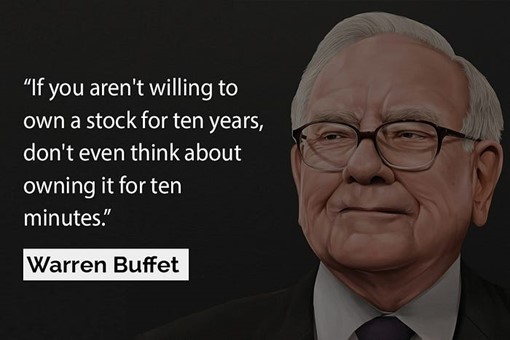
1- Don’t Hold a Stock for 10 Minutes Unless You’re Willing to Hold It for 10 Years:
Source: ScrollDroll
Warren Buffett: I’m not recommending that people buy stocks today or tomorrow or next week or next month. I think it all depends on your circumstances. But you shouldn’t buy stocks unless you expect, in my view, you expect to hold them for a very extended period and you are prepared financially and psychologically to hold them the same way you would hold a farm and never look at a quote. You don’t need to pay attention to them.
Investing, according to Warren Buffett, is more about understanding human behavior than about sheer intelligence. It’s about playing the long game. Buffett’s mantra? “Don’t hold a company for 10 minutes unless you’re willing to hold it for 10 years.” This mindset shifts your focus from quick gains to the long-term prospects of the businesses you invest in.
Take a look into Buffett’s portfolio, and you’ll find giants like American Express, Coca-Cola, and Bank of America. What’s intriguing? He’s held onto these investments for more than a decade. Let’s talk Coca-Cola. Buffett’s been in since 1988, investing about $1.3 billion. Fast forward to today, and that investment has ballooned to $24.8 billion, churning out a cool $700 million in dividends annually.
See the magic? It’s the power of time and the beauty of compounding. Investing isn’t a sprint; it’s a marathon. And Buffett’s wealth is a testament to the rewards of patience and long-term vision.
Warren Buffett: You’ve got to be prepared when you buy a stock to have it go down 50% or more and be comfortable with it as long as you’re comfortable with the holding. And I pointed out three times in Berkshire’s history when the price of Berkshire stock went down 50%. There wasn’t anything wrong with Berkshire when those three times occurred. But if you’re going to look at the price of the stock and think that you have to act because it’s doing this or that or somebody else tells you “How can you stay with that when something else is going up?” or anything. You’ve got to be in the right psychological position. And frankly, some people are not really careful. Some people are more subject to fear than others.
Here’s the bottom line: Think long haul. Don’t get sucked into short-term gambles. Stick to Buffett’s advice: If you wouldn’t hold it for 10 years, don’t hold it for 10 minutes.
Warren Buffett: The real test of whether you’re investing from a value standpoint or not is whether you care whether the stock market is open tomorrow. If you’re making a good investment in a security, it shouldn’t bother you if they closed down the stock market for five years.
2- Don’t Lose Money:

Source: WonderfulQuote
Warren Buffet: The first rule of an investment is “Don’t lose”, and the second rule is don’t forget the first rule, and that’s all the rules there are. I mean if you buy things for far below what they’re worth and you buy a group of them, you basically don’t lose money.
Warren Buffett’s top rule in investing, also championed by Phil Town in his book “Rule #1”, is simple yet crucial. It’s all about mindset. Let’s say you invest in ten stocks, and six soar — that’s a win. But what about the other four? They shouldn’t drag you down.
When you’re in the red, don’t keep pouring money into it. Sounds like common sense, right? But in the stock market, it’s easier said than done. When losses mount, the natural instinct is to try and bounce back. But sometimes, cutting your losses is the smart move.
The big lesson from Buffett? Keep tabs on those valuations. Grab stocks below their actual worth, and diversify your portfolio. This strategy slashes your risk.
Now, let’s talk real-world: Buffett’s Taiwan Semiconductor play. He jumped in during Q3 of 2022, but swiftly realized it wasn’t the right fit and pulled out by Q4.


Source: Dataroma
Even though he bought the stock when it was dirt cheap, his mistake didn’t bite back. He actually made money on it. So, remember Buffett’s top rule: “Don’t lose money.”
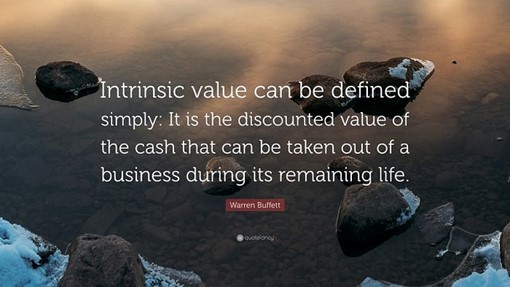
3- Buy Stocks Below Their Intrinsic Value:
Source: QuoteFancy
Warren Buffet: The only reason for making an investment and laying out money now is to get more money later on, right? that’s what investing is all about. If you buy Coca-Cola today, the company is selling for about 110 to 115 billion dollars in the market. The question is, if you had 110 or 115 billion, you wouldn’t be listening to me but I’d be listening to you incidentally, but the question is would you lay it out today to get what the Coca-Cola company is going to deliver to you over the next 200 or 300 years? The discount rate doesn’t make much difference after as you get further out, and that is a question of how much cash they’re going to give you. It isn’t a question of how many analysts are going to recommend it or what the volume in the stock is or what the chart looks like or anything. It’s a question of how much cash it’s going to give you. That’s the only reason. It’s true if you’re buying a farm, it’s true if you’re buying an apartment house, any financial asset, you’re laying out cash now to get more cash back later on. And the question is, how much are you going to get, when are you going to get it and how sure are you?
Here’s something that often escapes notice when jumping into the stock market: It’s not just about betting on the next big thing. It’s about digging into a company’s free cash flows, growth trajectory, and making a conservative forecast of future cash flows.
Then, it’s about figuring out what you’d be willing to pay for those future cash flows today, ensuring a solid return on investment. In simpler terms, it’s about buying below what the company is truly worth.
Let’s take Buffett’s move with Apple in early 2016 as a prime example. Back then, Apple’s market cap was around $600 billion, giving it a PE ratio of 12.
Buffett recognized it as a solid company with a strong competitive advantage, or “MOAT,” likely to generate increasing cash flows over time. So, he snapped it up at that price.
Fast forward to today, Apple’s market cap has soared to about $2.6 trillion, and its annual free cash flow has more than doubled from $53 billion to $100 billion.
The key is to ensure the company you’re investing in can generate enough cash flow to justify its current market valuation. In other words, make sure you’re getting a good deal based on what the company can deliver.
Warren Buffett: The real question is, Berkshire is selling for 105 or so billion now. If you’re going to buy the whole company for 105 billion, can we distribute enough cash to you soon enough to make it sensible at present interest rates to lay out that cash now? and that’s what it gets down to. If you can’t answer that question, you can’t buy the stock. You can gamble in the stock if you want to or your neighbours can buy it. But if you don’t answer that question and I can’t answer that for internet companies, for example, there are all kinds of companies I can’t answer it for, but I just stay away from those.
So, make sure you’re buying well below the intrinsic value and if you’re not sure, stay away.
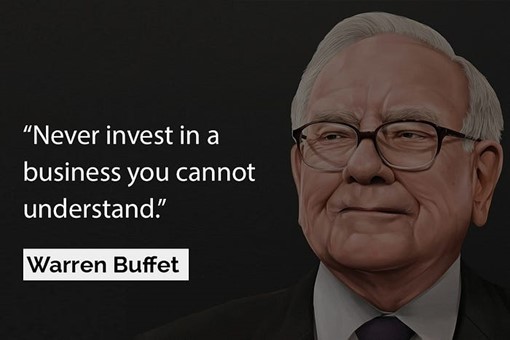
4- Stick To Businesses That You Understand:
Source: ScrollDroll
Warren Buffett: I have an old-fashioned belief that I should expect to make money in things that I understand. And when I say understand, I don’t mean to understand what the product does or anything like that. I mean, understand what the economics of the business are likely to look at look like 10 years from now or 20 years from now. I know in general what the economics of say, Wrigley chewing gum will look like 10 years from now. The Internet isn’t going to change the way people chew gum. It isn’t going to change which gum they chew. If you own the chewing gum market in a big way and you’ve got Double mint and Spearmint and Juicy Fruit, those brands will be there 10 years from now. So, I can’t pinpoint exactly what the numbers are going to look like on Wrigley but I’m not going to be way off if I try to look forward on something like that. Evaluating that company is within what I call my circle of competence. I understand what they do. I understand the economics of it. I understand the competitive aspects of the business.
Many investors stumble here, especially when they’re just getting started. They might use a stock screener and spot some seemingly cheap stocks, but they often fail to dig deep into understanding the businesses they’re investing in. This becomes problematic when the stock inevitably fluctuates, leaving them uncertain about their next move.
Let’s say you buy a random company, and the stock price drops 30% the next day. Is it a bargain opportunity or a sign that something’s fundamentally wrong? Without thorough research and a firm grasp of the business, you’ll be left guessing.
That’s why it’s crucial to stick to what you know — your circle of competence. This means investing in businesses you understand inside and out.
Warren Buffett: Defining your circle of competence is the most important aspect of investing. It’s not important how large your circle is. You don’t have to be an expert on everything, but knowing where the perimeter of that circle of what you know and what you don’t know is and staying inside of it is all important. And if I don’t understand something, but I get all excited about it because my neighbours are talking about the stocks are going up and everything. They start fooling around someplace else. Eventually they’ll get creamed and they should.
Buffett’s advice is clear: Stay within your circle of competence. It’s not about the size of your circle; it’s about sticking to what you know. Stray into unfamiliar territory, and you’re asking for trouble.
5- Don’t Buy Cigar Butts:

Source: Trade Brains
Warren Buffett: I’ve been taught by Ben Graham to buy things on a quantitative basis. Look around for things that are cheap and I was taught that in say, in 1949 or 1950, it made a big impression on me. So I went around looking for what I call “used cigar butts” of stocks. And the cigar butt approach to buying stocks is that you walk down the street and you’re looking around for cigar butts and you find this terrible looking soggy, ugly looking cigar, one puff left in it, but you pick it up and you get your one puff. Disgusting and throw it away, but it’s free. I mean, it’s cheap. And then you look around for another soggy, one puff cigarette. Well, that’s what I did for years. It’s a mistake, although, you can make money doing it but you can’t make it with big money. It’s so much easier just to buy wonderful businesses. So now, I would rather buy a wonderful business at a fair price than a fair business at a wonderful price.
Buffett’s way of thinking, partly inspired by Charlie Munger, has greatly boosted Berkshire’s wealth. At first, Buffett followed Ben Graham’s lead, hunting for super cheap companies, even if they weren’t great. Graham believed that if you bought a bunch of these cheapies, overall, you’d make out okay.
But Buffett realized this wasn’t the best approach. He found it smarter and easier to invest in really good companies and hold onto them for a long time. Sure, these companies might not be dirt cheap, but if you find a solid one at a fair price and stick with it, you’re in for a win.
Look at Apple, for example. It’s a top-quality business, no doubt. Buffett saw its value and potential, buying it at a reasonable price. While there might be some super cheap companies out there, Buffett saw the value in sticking with a quality pick like Apple.
In short, Buffett’s new motto is about grabbing fantastic companies at fair prices, rather than settling for okay companies at super cheap prices. And it’s paid off big time for him.
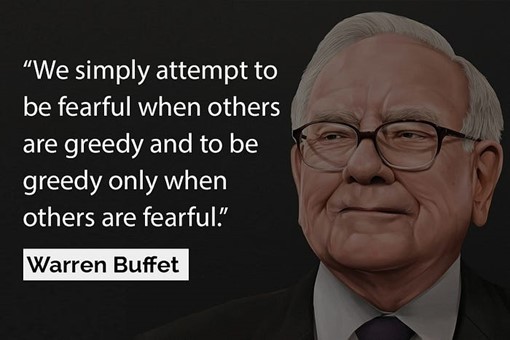
6- Be Greedy When Others Are Fearful and Fearful When Others Are Greedy:
Source: ScrollDroll
Warren Buffett: People behave very peculiarly in terms of their reactions because they’re human beings and they get excited when others get excited, they get greedy when others get greedy, they get fearful when others get fearful and they’ll continue to do so. And you will see things you won’t believe in your lifetime in securities markets. Investors behave in very human ways, which is they get very excited during bull markets, and when they look in the rearview mirror and they see a lot of money having been made in the last few years, they just push and push and push up prices, and when they look in the rearview mirror and they see no money having been made, they just say this is a lousy place to be. So they don’t care what’s going on in the underlying business, and it’s astounding, but that makes for a huge opportunity, just huge opportunity.
One key point: Most investors follow the herd. They all get greedy at the same time, and they all panic together when fear strikes. This herd mentality drives the stock market, fuelled by fear and short-term thinking.
The kicker? If you can break away from the crowd and invest in top-notch businesses during market panics, you’re on the path to Buffett-like returns. And that’s exactly what he does. In 2008, for instance, when the banking system was in turmoil. Buffett swooped in and made some big investments in Goldman Sachs. Then, in 2011, amidst more chaos, he jumped into Bank of America.
Why? Because he understood these businesses inside out. He knew the risks were low, so while everyone else was running scared, he seized the opportunity to be greedy.
Warren Buffett: It doesn’t take brains, it takes temperament. It takes the ability to sit there and look at something. When I started out in 1950, I would go through and find things at two times earnings, and they were perfectly decent businesses and people wanted jobs at those companies and everybody knew they were going to be around and they wouldn’t buy them at two times earnings, and that’s when interest rates were 2.5%.
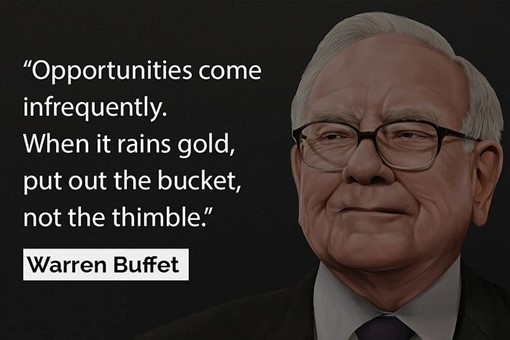
7- Seize Your Golden Opportunities:
Source: ScrollDroll
Warren Buffet: Big opportunities in life have to be seized. We don’t do very many things but when we get the chance to do something that’s right and big, we’ve got to do it, and even to do it in a small scale is just as big a mistake almost as not doing it at all. You’ve really got to grab them when they come because you’re not going to get 500 great opportunities.
In my 38 years, there have only been three incredible stock market opportunities: the dotcom crash, the global financial crisis, and the 2020 stock market crash. These chances come around roughly once every decade or so. You’ve got to stay alert and mentally prepare to seize them when they arise.
What I noticed? Most people let these opportunities slip right through their fingers. Instead of researching the stock market, they’re glued to TikTok. The blueprint is there, but many won’t take action.
The key is to act. If you’re serious, write down some investing goals for the next month. Maybe invest your first $500, dive into a company’s annual report, or pick up a famous stock market book. I’ll share some of my favourites at the end of this article.
Whatever it takes, make a plan and follow through. Don’t just listen to the secrets from the world’s best investor — act on them.
Warren Buffett: The biggest mistakes we’ve made by far, I’ve made not we’ve made, biggest mistakes I’ve made by far are mistakes of omission and not Commission. I mean, it’s the things I knew enough to do. They were within my circle of competence and I was sucking my thumb. Those are the ones that hurt. They don’t show up any place. I probably cost Berkshire at least $5 billion by sucking my thumb 20 years ago or close to it when Fannie Mae was having some troubles and we could have bought the whole company for practically nothing. I don’t worry about that if it’s Microsoft because I don’t know it. Microsoft isn’t in my circle of competence, that’s why I don’t have any reason to think I’m entitled to make money out of Microsoft or out of Cocoa Beans or whatever, but I did know enough to understand Fannie Mae and I blew it, and that never shows up under conventional accounting, but I know the cost of it, I know. I passed it up, and those are the big mistakes.
So when you get that pitch right in your Hitting Zone, make sure you swing. You might not swing for many years but when you do get that perfect pitch, SWING HARD.
Motivational Quote
“In business, excellence of performance manifests itself, among other things, in the advancing of methods and processes: in the improvement of products, in more perfect organisation, eliminating friction as well as waste: in bettering the condition of working people, developing their faculties and promoting their happiness: in the establishment of right relations with customers and with community”: Louis Brandeis
Spiritual Prosperity World
For more info, visit: https://www.spiritualprosperity.world
to receive my free gift – “How to Create a Success Mindset: 10 qualities of a successful entrepreneur checklist, plus a bonus of 30 self improvement tips”.
Also, check out the Affiliate Offers, Blogs and Motivational Quotes, Product Reviews and Monthly Newsletters pages.
LOUISE BATHE
SPIRITUAL PROSPERITY WORLD
Newsletter June 2024


The Pros and Cons of Solar Energy
Good for the planet
Solar energy, derived from the sun’s radiation, has gained popularity as a sustainable and renewable energy source. In terms of how solar panels actually work, they are made up of photovoltaic (PV) cells which consist of semiconductor materials to convert daylight into electricity. When a solar PV panel is exposed to the rays of the sun, in natural daylight, it turns the solar energy into electrical current, using an inverter.
This means that solar is a source of renewable energy, as it doesn’t deplete the Earth’s natural resources. It remains available month after month, year after year. Solar panels can even generate power on cloudy days and work in winter too, making them a sustainable source of energy for the future.
Solar panels don’t create greenhouse gas emissions when operating, so choosing solar power is good for the planet, helping you shrink your carbon footprint and create a more sustainable home. These positive environmental impacts are just some of the multiple benefits you might want to consider when deciding whether solar is right for you.
Pros of Solar Energy
Renewable and Sustainable:
Unlimited Resource: Solar energy is abundant and will not run out as long as the sun exists.
Sustainability: It provides a long-term energy solution without depleting natural resources.
Environmental Benefits:
Reduces Carbon Footprint: Solar power generation produces no greenhouse gases, reducing air pollution and mitigating climate change.
Minimal Water Usage: Unlike nuclear and coal plants, solar energy systems use little to no water for maintenance, conserving water resources.
Energy Independence:
Decentralized Power: Individuals and businesses can generate their own electricity, reducing dependence on centralized power grids and enhancing energy security.
Economic Advantages:
Job Creation: The solar industry creates jobs in manufacturing, installation, maintenance, and more.
Decreasing Costs: The cost of solar panels and associated technologies has decreased significantly, making it more affordable.
Low Operational Costs:
Minimal Maintenance: Once installed, solar energy systems require relatively low maintenance and have long lifespans.
Stable Energy Costs: Solar energy can protect against fluctuations in fossil fuel prices.
Technological Advancements:
Efficiency Improvements: Ongoing research and development are continuously improving the efficiency and effectiveness of solar technologies.
Energy Storage Solutions: Advances in battery storage technologies enhance the reliability and usability of solar power.
Cons of Solar Energy
Intermittent Energy Source:
Weather Dependent: Solar power generation is affected by weather conditions and is less effective on cloudy days or during storms.
Nighttime Limitations: Solar panels do not produce electricity at night, necessitating storage solutions or backup systems.
High Initial Costs:
Upfront Investment: The initial cost of purchasing and installing solar panels and systems can be high, although it has been decreasing over time.
Installation Costs: Professional installation can add to the overall expense.
Space Requirements:
Land Use: Large-scale solar farms require significant land area, which may impact land use and local ecosystems.
Roof Suitability: Not all buildings have roofs that are suitable for solar panels due to shading, orientation, or structural limitations.
Energy Storage:
Storage Costs: Efficient energy storage systems (like batteries) are still relatively expensive, adding to the overall cost of a solar energy system.
Technology Limitations: Current battery technologies have limitations in terms of capacity and lifespan.
Resource Use and Environmental Impact:
Manufacturing Impact: The production of solar panels involves the use of hazardous materials and energy, which can have environmental impacts.
Recycling Issues: Solar panels have a lifespan of around 25-30 years, and recycling them at the end of their life poses challenges.
Grid Integration Challenges:
Infrastructure: Integrating solar power into existing electricity grids requires updating infrastructure and managing variable energy inputs.
Regulatory and Policy Issues: Policies and incentives for solar energy vary widely by region, which can affect the feasibility and adoption rates.
Overall, while solar energy presents many advantages, particularly in terms of environmental sustainability and long-term economic benefits, it also faces challenges that need to be addressed through technological advancements, supportive policies, and strategic planning.
Save money and store your power
As well as cutting carbon, solar panels can reduce your electricity bills, when coupled with a battery storage system. Adding a solar battery helps you make the most of the energy you generate at home, by storing it for use at different times of day and night, helping you avoid wasting the electricity you’ve generated.
A solar battery can be installed in a range of different places in a home, such as in a loft, garage, utility room, or under the stairs. For homeowners who already have solar panels, there are also ways to add a battery to your property as a retrofit option.
Motivational Quote
“Everyone has a purpose in life… A unique gift or special talent to give to others, and when we blend this unique talent with service to others, we experience the ecstasy and exultation of our own spirit, which is the ultimate goal of all goals”: Deepak Chopra
Spiritual Prosperity World
For more info, visit: https://www.spiritualprosperity.world
to receive my free gift – “How to Create a Success Mindset: 10 qualities of a successful entrepreneur checklist, plus a bonus of 30 self improvement tips”.
Also, check out the Affiliate Offers, Blogs and Motivational Quotes, Product Reviews and Monthly Newsletters pages.
LOUISE BATHE
SPIRITUAL PROSPERITY WORLD
Newsletter May 2024
INSPIRATIONAL WOMEN THROUGHOUT HISTORY |

Queen Elizabeth II
Queen Elizabeth II served as head of the royal family for 70 years, making her the longest-reigning monarch in British history. She celebrated her Platinum Jubilee in June 2022, just three months before she passed away at 96 years old.

Marie Curie
Curie was the scientific genius behind radioactivity and X-rays as we know them today. Not only did she become the first woman to ever win the Nobel Peace Prize in 1903, but she also became the first person to ever win it twice in 1911. Curie was 66 when she died in 1934.

Jane Austen
Austen changed the course of English literature with her social commentary in 1813’s Pride and Prejudice. Interestingly enough, she wasn’t revealed as the author of her first three novels until after her death in 1817 at age 41.

Amelia Earhart
As the first female pilot to fly across the Atlantic Ocean, Earhart forever changed the world of aviation. Her mysterious disappearance while flying over the Pacific Ocean in 1937 has sparked a range of theories, from a potentially fatal crash to her spending her final days on a remote island.

Oprah Winfrey
From 1986 to 2011, Winfrey hosted her popular talk show, which turned her into an Emmy-winning media sensation. Aside from her successful magazine, TV network, and producing career, she is also an esteemed philanthropist and political activist.

Princess Diana
The Princess of Wales’ bold independence, daring fashion, and close bond with her sons made her a beloved member of the royal family. She also spoke openly about mental health and HIV awareness and continued to support several charities after her 1992 separation from then-Prince Charles. Five years later, she died in a car crash at age 36.

Jacqueline Kennedy Onassis
The former first lady transformed the White House by restoring its original elegance and making an effort to procure art and furniture owned by past presidents. Onassis also had a deep knowledge of other cultures and spoke fluent French, Spanish, and Italian, which made it easier for her to bond with citizens and diplomats from other countries. She died at age 64 in 1994.

Elizabeth Taylor
The Old Hollywood star captivated moviegoers in hits like Cleopatra (1963) and Suddenly, Last Summer (1959). The two-time Best Actress Oscar winner was also one of the first celebrities to speak openly about the AIDS crisis, creating the Elizabeth Taylor HIV/AIDS Foundation in 1991. She died in 2011 at age 79.

Mother Teresa
Considered one of the world’s greatest humanitarians, Mother Teresa dedicated her life to charity work. She received the Nobel Peace Prize in 1979 and was posthumously canonized as Saint Teresa of Calcutta in 2016—almost two decades after her death at age 87.

Michelle Obama
Obama was the first Black first lady of the United States during the presidency of her husband, Barack Obama, from 2009 to 2017. Her main initiatives were focused on healthy living and education. In 2018, she announced her first major project with the Obama Foundation, the Girls Opportunity Alliance, which aims to empower adolescent girls through education.

Katharine Hepburn
It’s no secret Hepburn’s on-camera work was nothing short of fantastic, but she was just as inspiring in her day-to-day life. She was one of the first actresses to embrace menswear and trousers. Her style choices inspired women of the time to not be afraid to wear looks that made them feel comfortable. She died at age 96 in 2003.

Dolly Parton
With 10 Grammy wins and 53 nominations, Parton has created a lasting legacy in country music, but the talented singer makes a big difference offstage as well. From promoting children’s literacy to donating $1 million to COVID-19 research, her philanthropy has helped countless people.
“The more tranquil a person becomes, the greater is his success, his influence, his power for good. Calmness of mind is one of the beautiful jewels of wisdom. It is the result of long and patience effort in self-control.”
(James Allen – As A Man Thinketh: Serenity)
LOUISE BATHE
SPIRITUAL PROSPERITY WORLD
Newsletter April 2024
BREAKING NEWS |

“NVIDIA Unveils Blackwell GPU, Revolutionizing Trillion-Parameter AI and Reducing Costs”
NVIDIA has launched its latest Blackwell platform, introducing a new era in generative AI with its capacity to handle trillion-parameter models efficiently, marking a significant leap in AI capabilities.
The Blackwell GPU, unveiled at the GTC conference, promises up to 25 times lower operating costs and energy consumption, courtesy of its advanced architecture and the new TensorRT-LLM Compiler.
The Blackwell GPU architecture, a successor to the NVIDIA Hopper architecture, is equipped with six groundbreaking technologies aimed at accelerating a range of applications from data processing and engineering simulation to quantum computing and AI.
NVIDIA’s CEO, Jensen Huang, emphasized that this development heralds a new industrial revolution, powered by generative AI.
Notable industry leaders such as Sundar Pichai of Google, Andy Jassy of Amazon, and Satya Nadella of Microsoft have expressed their support and plans to integrate Blackwell into their infrastructures, highlighting the widespread industry adoption and the platform’s anticipated impact on future technological advancements.
Key features of the Blackwell GPU include a powerful new chip design, enhanced Transformer Engine for AI processing, advanced NVLink technology for improved GPU communication, and innovations in system reliability and security.
These advancements collectively facilitate significant strides in AI model training and real-time inference, pushing the boundaries of what’s possible in AI research and application.
Additionally, the introduction of the NVIDIA GB200 Grace Blackwell Superchip, part of the broader Blackwell platform, showcases a significant boost in AI performance, offering a comprehensive solution for the most demanding compute tasks in AI.
With its adoption by major cloud providers and leading technology companies, NVIDIA’s Blackwell is set to be a cornerstone in the next wave of AI innovation, providing the computational power needed to drive significant breakthroughs across various industries.

“AI Tool Mia Detects Breast Cancer Missed by Doctors in NHS Trial”
An artificial intelligence tool named Mia has demonstrated remarkable efficacy in detecting early signs of breast cancer, identifying cases that were overlooked by human doctors during a trial with the NHS.
The AI was tested on mammograms from over 10,000 women, successfully flagging cancer in 11 women whose conditions had previously gone unnoticed by medical professionals.
Mia’s trial at NHS Grampian revealed its ability to spot minuscule tumors, sometimes as small as 6mm, which are often difficult for the human eye to detect.
One of the beneficiaries, Barbara, underwent minor surgery and a brief period of radiotherapy thanks to the early detection, highlighting the AI’s potential in catching early-stage cancers that have higher survival rates.
The AI’s developer, Kheiron, suggests that Mia could significantly reduce the waiting times for mammogram results from two weeks to just three days.
The trial ensured a dual-review process, pairing Mia’s analysis with human radiologists, pointing towards a future where AI could reduce the workload for radiologists.
Dr. Gerald Lip, who led the project, emphasized the importance of human oversight but acknowledged the potential for AI to alleviate some of the pressures faced by radiologists, including fatigue and distraction.
Despite its promising results, Mia’s capabilities were somewhat limited during the trial, as it could not access patient histories or learn from new data due to regulatory constraints.
The trial’s success has been met with cautious optimism from the medical community, with entities like the Royal College of Radiologists and Cancer Research UK acknowledging the potential of AI in enhancing diagnostic accuracy and alleviating the strain on healthcare services.
However, they also call for more research to fully understand how AI tools like Mia can be integrated into clinical practice to improve patient outcomes.

“Stability AI Launches Advanced Image Services on Developer Platform”
Stability AI today announced a significant expansion of its Developer Platform API, introducing a new suite of image services designed to revolutionize media creation.
These services leverage advanced image models to provide developers with powerful tools for generating, enhancing, outpainting, and editing images, simplifying the process of producing high-quality visual content.
The platform’s services are categorized into four key areas, addressing the varied needs of developers. Companies such as Nightcafe and Openart have already integrated these tools into their offerings, allowing users to generate innovative and high-quality content.
Generate: Developers can create new, original media from text descriptions with the platform’s flagship image service, Stable Image Core, and the upcoming Stable Diffusion 3 model.
Upscale: The upscaling service enhances images and videos to 4K resolution, improving quality without losing detail, thanks to advanced creative upscaling technology.
Edit: Users can intuitively edit images using natural language prompts, facilitating complex tasks like inpainting, outpainting, and other modifications.
Control: Soon, Stability AI will introduce tools to guide content generation, ensuring outputs align with user intentions, essential for creating consistent and tailored content.
Emphasizing safe and responsible AI use, Stability AI has implemented robust safety measures to prevent misuse and ensure content adheres to high ethical standards.
Developers eager to explore these new capabilities can access the REST API backend immediately, with comprehensive documentation and a hands-on notebook available to facilitate integration and experimentation with the new image services.
Are you making the most of every day?
I was born in the early 1950s and have recently been reviewing the changes in the world during my lifetime.
When I was young there was black and white television and landline telephones. In the 1960s colour TV gradually replaced black and white TV. In the 1970s Computers were the size of a large room. Over time, mobile phones, laptops, tablets and PCs have come a long way, so nowadays people use their smart phone to take pictures instead of a camera, and they send text and SMS messages and emails on their smart phones too. Also along the way we had vinyl records (LPs and singles etc) which gave way to CDs and DVDs and now we simply access them online to listen to them instead of buying a physical product.
As AI changes the world for the better, technology is changing the way we operate and we need to change with the world and not get left behind. Make sure you make the most of every day and stay ahead of the competition.
LOUISE BATHE
SPIRITUAL PROSPERITY WORLD
Spiritual Prosperity World March 2024 Newsletter
How Solo Entrepreneurs Can Use Marketing Data to Improve Their Businesses
Marketing data can be strategically used by solo entrepreneurs to make informed decisions, tailor marketing efforts, and enhance customer engagement. Here are some types of marketing data and examples of how they can be used by solo entrepreneurs:
Customer Demographics: Information about the age, gender, income, and interests of potential customers. Solo entrepreneurs can use this data to target their marketing efforts more effectively. For example, a freelance graphic designer might focus their marketing on small business owners in creative industries.
Purchase History: Data on what customers have bought and how often. This can help solo entrepreneurs understand their customers’ preferences and tailor their offerings. For instance, an independent online retailer could use purchase history to suggest related products to repeat customers, increasing the chance of additional sales.
Customer Feedback: Insights from reviews, surveys, and direct customer interactions. This feedback is valuable for improving products or services and building customer loyalty. A solo consultant, for example, could use client feedback to refine their service offerings and address specific needs or concerns.
Web Analytics: Information on how visitors interact with a website, including which pages they visit and how long they stay. Solo entrepreneurs can use this data to optimize their website for better user experience and higher conversion rates. For example, a blogger can analyze which posts are most popular and focus on creating similar content to attract more visitors.
Social Media Metrics: Data from social media activities, such as follower growth, engagement, and content reach. This can help solo entrepreneurs understand the impact of their social media efforts and adjust their strategy to better engage with their audience. For example, a freelance photographer might use Instagram analytics to see which types of photos get the most engagement and plan future posts accordingly.
Market Trends and Economic Indicators: Information on industry trends and economic conditions can help solo entrepreneurs stay ahead of changes in the market. For example, a solo entrepreneur in the e-commerce sector might track online shopping trends to adjust their marketing and sales strategies in response to changing consumer behaviors.
For solo entrepreneurs, leveraging these types of marketing data can lead to more effective marketing strategies, improved customer relationships, and ultimately, business growth.
LOUISE BATHE
| Please subscribe to Spiritual Prosperity World |
|
If you found this Newsletter helpful, please like and share this email and subscribe to my monthly Newsletter for free. This membership includes a free gift of my Checklist on How to Create a Success Mindset – 10 Qualities of a Successful Entrepreneur plus 30 Self Improvement Tips. You will also receive 2 motivational quotes per day, plus 3 product posts per week, 1 detailed review video per week plus this monthly Newsletter. I am also working on several training courses to help you progress. Please let me know if there are any specific topics you would like me to include – louise@spiritualprosperity.world.
|
| For more information, please visit: |
| https://www.spiritualprosperity.world |
Digital & Online Marketing Newsletter November 2023
Online marketing, also known as digital marketing, is the practice of promoting products or services through digital channels such as websites, social media, email, search engines, and mobile apps. It involves using various online strategies and techniques to reach and engage with a target audience, increase brand visibility, and drive conversions and sales.
Some common online marketing strategies include:
- Search Engine Optimization (SEO): Optimizing a website to rank higher in search engine results pages (SERPs) and increase organic traffic.
- Pay-Per-Click (PPC) Advertising: Running targeted ads on search engines or social media platforms, where advertisers pay for each click.
- Social Media Marketing: Utilizing social media platforms such as Facebook, Instagram, Twitter, and LinkedIn to promote products or services and engage with followers.
- Content Marketing: Creating and distributing valuable, relevant, and consistent content to attract and retain a target audience.
- Email Marketing: Sending targeted emails to a list of subscribers to promote products, share updates, or nurture leads.
- Influencer Marketing: Collaborating with influential individuals or online personalities to promote products or services to their followers.
- Affiliate Marketing: Partnering with affiliates who promote products or services in exchange for a commission on each sale generated.
- Online PR and Reputation Management: Managing and monitoring a company’s online reputation through public relations strategies and addressing any negative feedback or reviews.
- Develop a Comprehensive Digital Marketing Strategy: Create a plan that encompasses all relevant online marketing channels, including social media, email, content and PPC advertising. Set clear goals and KPIs and regularly track an analyse your performance.
- Leverage Automation and Personalisation: Use automation tools to streamline your online marketing efforts, but don’t sacrifice personalisation. Use data to deliver targeted messaging and experiences that resonate with your audience.
- Monitor and Address Technical Issues: Regularly monitor your website and other online marketing channels for technical issues such as downtime or slow loading speeds. Address these issues promptly to ensure a positive user experience.
- Utilise Influencer Marketing: Partner with relevant influencers in your industry to amplify your online marketing efforts. This can help you reach new audiences and build credibility with your target market.
- Invest in User Generated Content: Encourage customers to create and share their own content related to your brand, such as product reviews or social media posts. This can help build trust the credibility with potential customers.
- Develop a Strong Brand Reputation: Prioritise managing customer feedback and complaints to maintain a positive brand reputation online. Respond promptly and professionally to all feedback, both positive and negative.
- Stay Up To Date On Trends and Changes: Stay current with changes and updates to online marketing channels and algorithms. Keep an eye on emerging trends and best practices and be prepared to adapt your strategies accordingly.
These are just a few examples of online marketing strategies, and businesses often employ a combination of tactics to achieve their marketing goals. The digital landscape is constantly evolving, so it’s important for marketers to stay up to date with the latest trends and tactics to effectively reach their target audience in the online space.
LOUISE BATHE
|
AFFILIATE MARKETING MONTHLY NEWSLETTER |
|
If you found this Newsletter helpful, please like and share this email and subscribe to my monthly Newsletter for only £15 per month to keep up to date on Affiliate Marketing. This membership includes a free gift of my Checklist on How to Create a Success Mindset – 10 Qualities of a Successful Entrepreneur plus 30 Self Improvement Tips. The membership also includes a free report into Affiliate Marketing Mastery as well as a free course on how to set up your own online business. I look forward to helping you to transform your life!
|
|
For more information, please visit: |
Affiliate Marketing Newsletter October 2023Understanding Affiliate Marketing |
|
Affiliate marketing is the process by which an affiliate earns a commission for marketing another person’s or company’s products. The affiliate simply searches for a product they enjoy, then promotes that product and earns a piece of the profit from each sale they make. |
|
|
Affiliate marketing is an advertising model in which a company compensates third-party publishers to generate traffic or leads to the company’s products and services. The third-party publishers are affiliates, and the commission fee incentivizes them to find ways to promote the company. |
|
KEY TAKEAWAYS |
|
|
· Affiliate marketing is a marketing scheme in which a company compensates partners for business created from the affiliate’s marketing tactics. · Digital marketing, analytics, and cookies have made affiliate marketing a billion-dollar industry. · Firms typically pay affiliates per sale and less frequently by clicks or impressions. · The three main types of affiliate marketing are unattached affiliate marketing, involved affiliate marketing, and related affiliate marketing. |
|
Understanding Affiliate Marketing |
|
|
The internet has increased the prominence of affiliate marketing. Amazon (AMZN) popularized the practice by creating an affiliate marketing program whereby websites and bloggers put links to the Amazon page for a reviewed or discussed product to receive advertising fees when a purchase is made. In this sense, affiliate marketing is essentially a pay-for-performance marketing program where the act of selling is outsourced across a vast network. |
|
|
Affiliate marketing predates the Internet, but in the world of digital marketing, analytics, and cookies made it a billion-dollar industry. A company running an affiliate marketing program can track the links that bring in leads and, through internal analytics, see how many convert to sales. |
|
|
An e-commerce merchant wanting to reach a wider base of internet users and shoppers may hire an affiliate. An affiliate could be the owner of multiple websites or email marketing lists; the more websites or email lists that an affiliate has, the wider its network. The hired affiliate then communicates and promotes the products offered on the e-commerce platform to their network. The affiliate does this by running banner ads, text ads, posting links on its websites, or sending emails to clientele. Firms use advertisements in the form of articles, videos, and images to draw an audience’s attention to a service or product. |
|
|
Visitors who click the ads or links are redirected to the e-commerce site. If they purchase the product or service, the e-commerce merchant credits the affiliate’s account with the agreed-upon commission, which could be 5% to 10% of the sales price. |
|
|
According to Business Insider, 15% of e-commerce revenue can be attributed to affiliate marketing |
|
Special Considerations |
|
|
The goal of this model is to increase sales and create a win-win solution for both merchant and affiliate. The system is unique and profitable and becoming increasingly popular. |
|
|
The internet and improving technologies are making the model easier to implement. Companies have improved how they track and pay commissions on qualified leads. Being better able to track leads and sales contributes to how they can improve or better position their products. |
|
|
Those interested in pursuing affiliate marketing will benefit from understanding what’s involved, as well as its advantages and disadvantages. Companies seeking affiliates will benefit from properly vetting and qualifying their partners. Overall, it is a low-cost, effective way of advertising products and services, increasing brand awareness, and expanding a consumer base. |
|
Types of Affiliate Marketing |
|
|
There are three main types of affiliate marketing: unattached affiliate marketing, related affiliate marketing, and involved affiliate marketing. |
|
|
1. Unattached Affiliate Marketing: This is an advertising model in which the affiliate has no connection to the product or service they are promoting. They have no known related skills or expertise and do not serve as an authority on or make claims about its use. This is the most uninvolved form of affiliate marketing. The lack of attachment to the potential customer and product absolves the affiliate from the duty to recommend or advise. 2. Related Affiliate Marketing: As the name suggests, related affiliate marketing involves the promotion of products or services by an affiliate with some type of relationship to the offering. Generally, the connection is between the affiliate’s niche and the product or service. The affiliate has enough influence and expertise to generate traffic, and their level of authority makes them a trusted source. The affiliate, however, makes no claims about the use of the product or service. 3. Involved Affiliate Marketing: This type of marketing establishes a deeper connection between the affiliate and the product or service they’re promoting. They have used or currently use the product and are confident that their positive experiences can be shared by others. Their experiences are the advertisements, and they serve as trusted sources of information. On the other hand, because they’re providing recommendations, their reputation may be compromised by any problems arising from the offering. |
|
Advantages and Disadvantages of Affiliate Marketing |
|
|
Affiliate marketing can yield great rewards for the advertising company and the affiliate marketer. The company benefits from low-cost advertising and the creative marketing efforts of its affiliates, and the affiliate benefits by earning additional income and incentives. The return on investment for affiliate marketing is high as the company only pays on traffic converted to sales. The cost of advertising, if any, is borne by the affiliate. |
|
|
The advertising company sets the terms of an affiliate marketing program. Early on, companies largely paid the cost per click (traffic) or cost per mile (impressions) on banner advertisements. As technology evolved, the focus turned to commissions on actual sales or qualified leads. The early affiliate marketing programs were vulnerable to fraud because clicks could be generated by software, as could impressions. |
|
|
Now, most affiliate programs have strict terms and conditions on how to generate leads. There are also certain banned methods, such as installing adware or spyware that redirect all search queries for a product to an affiliate’s page. Some affiliate marketing programs go as far as to lay out how a product or service is to be discussed in the content before an affiliate link can be validated. |
|
|
So an effective affiliate marketing program requires some forethought. The terms and conditions must be clearly spelled out, especially if the contract agreement pays for traffic rather than sales. The potential for fraud in affiliate marketing is possible. |
|
|
Unscrupulous affiliates can squat on domain names with misspellings and get a commission for the redirect. They can populate online registration forms with fake or stolen information, and they can purchase AdWords on search terms the company already ranks high on, and so on. Even if the terms and conditions are clear, an affiliate marketing program requires that someone monitor affiliates and enforce rules. |
|
|
In exchange, however, a company can access motivated, creative people, to help sell their products or services to the world. |
|
|
Pros |
|
|
· Access to a broader market |
|
|
· Better accounting of qualified leads |
|
|
· Low-cost advertising |
|
|
Cons |
|
|
· Subject to fraud |
|
|
· Less creative control |
|
|
· Vulnerable to theft |
|
Examples of Affiliate Marketing |
|
Amazon Affiliate Marketing |
|
|
Amazon’s affiliate marketing program, Amazon Associates, is one of the world’s largest affiliate marketing programs.2 Creators, publishers, and bloggers sign up to have Amazon products and services shared on their websites or apps, and in return, receive compensation for the sales their sites generate. |
|
|
Amazon sets strict criteria for the types of sites and apps that host its ads. For example, sites must not contain replicated content from another site or creator and be available to the public. Websites must be active with fresh content and suitable according to Amazon’s standards. For example, they must not contain obscene or offensive content, promote violence or illegal acts, or contain any content deemed harmful to others. |
|
|
Approval is contingent on a thorough review by Amazon staff and meeting a qualified sales quota (three within 180 days of the application). If an application is rejected, it will not be eligible for reconsideration. Once approved, commissions are earned as site visitors purchase products or services from Amazon. |
|
|
Amazon Associates can earn up to 20% in commissions for qualified sales. Rates are fixed and based on product and program categories. As a bonus, Amazon offers special commissions on certain events. |
|
Etsy Affiliate Marketing |
|
|
Etsy (ETSY) — a global, online marketplace for vintage goods and other unique items—promotes its products through various channels, including affiliate marketing partners. To apply, applicants must submit an online application through its affiliate program portal. To qualify as an Etsy affiliate marketing partner, eligible candidates must be at least 18, have an active, unique website, have a brand identity, and meet other criteria.3 |
|
|
If approved, Etsy pays a commission to the affiliate for sales they procure—sales resulting from their site’s promotion of the product. Commission rates vary and are paid on the order price. Etsy sellers can be affiliates, but they cannot earn commissions on their products without special permission. Etsy declares that it has the right to terminate an agreement at any time for any reason and that it can withhold compensation for any legitimate reason. |
|
eBay Affiliate Marketing |
|
|
eBay’s Partner Network is eBay’s affiliate marketing program that pays partners for sharing their personal listings outside of eBay Inc. (EBAY). The affiliate earns a commission and may earn credit towards their final merchant fees.4 eBay partners can also earn commissions on other sellers’ items. |
|
|
Commissions are earned when a buyer bids on or immediately purchases an item within 24 hours of clicking the eBay purchase link on the affiliate’s site. For submitted bids, the commission is paid if the buyer wins the auction within 10 days of the bid. |
|
|
Commission rates depend on the category of items sold and range from 1%-4%. No more than $550 will be paid on any one qualifying sale. Gift cards, items sold by charities, and special promotions are generally excluded as qualifying sales because of their low revenue streams. |
|
Buzzfeed |
|
|
Buzzfeed is a New York-based digital media company known for viral news and entertainment stories, quizzes, and product reviews. Its Buzzfeed Shopping segment features and reviews different partners’ products and services. Visitors can read Buzzfeed’s product reviews and select affiliate links to purchase. Buzzfeed earns a commission from each sale generated from its website. |
|
How Do Affiliate Marketers Get Paid? |
|
|
Affiliate marketers get paid a commission for referring customers to companies where they make purchases. These commissions can range from less than 1% to 20% or more, depending on the product and level of referral volume. For online campaigns, a customized link or referral code is used to track sales. In this sense, it is a source or passive income since the affiliate can continue to earn money once they have set up their campaign. |
|
How Much Money Can You Make As an Affiliate Marketer? |
|
|
Incomes for affiliate marketers vary, with some making a few hundred dollars and some making six figures. It depends on what is being marketed, how much influence the marketer has, the affiliate’s reach, and how much time is invested in marketing products. Often, those spending more time marketing the company’s products will earn more money. |
|
Can Beginners Do Affiliate Marketing? |
|
|
Becoming successful through affiliate marketing takes time, skill, and experience. However, it may suit beginners a bit better than alternative platforms since you do not have to invest in physical merchandise or inventory at the start. |
|
Can You Start Affiliate Marketing With No Money? |
|
|
Yes, there are several free platforms and affiliate networks available for little or no money. Instead, you will need to create a large online following through efforts such as blogging, social media posting, and so on. |
|
How Do I Become an Affiliate Marketer? |
|
|
To become an affiliate marketer, consider what platform you will use to promote products and/or services. Blogs are an effective channel for advertising and promoting as it allows the blogger, serving as an expert, to express an opinion about the offering. |
|
|
After identifying a platform, find a specific category that you are comfortable with or interested in. A focused segment can better help you attract a dedicated consumer base. Research affiliate programs and choose one or more based on your needs, whether it be earning high commissions or generating more traffic. Lastly, develop solid and interesting content around the offerings and work to increase traffic to your site. |
|
|
I recommend that you visit Groove to set up a free account, which could save you a great deal of money on a monthly basis by providing everything from websites and domains, to pages, emails, blogs, funnels, shopping carts and more: |
|
|
|
|
LOUISE BATHE |
|
AFFILIATE MARKETING MONTHLY NEWSLETTER |
|
If you found this Newsletter helpful, please like and share this email and subscribe to my monthly Newsletter for only £15 per month to keep up to date on Affiliate Marketing. This membership includes a free gift of my Checklist on How to Create a Success Mindset – 10 Qualities of a Successful Entrepreneur plus 30 Self Improvement Tips. The membership also includes a free report into Affiliate Marketing Mastery as well as a free course on how to set up your own online business. I look forward to helping you to transform your life! |
|
For more information, please visit: |
Website Disclaimer
Spiritualprosperity.world cannot and does not make any guarantees about your ability to get results or earn any money with our ideas, information, tools, or strategies. Nothing on any of our pages, any of our websites, or any of our content or curriculum is a guarantee or promise of results or future earnings, and we do not offer any legal, medical, tax or other professional advice. Any financial numbers referenced here, or on any of our sites, are illustrative of concepts only and should not be considered average earnings, exact earnings, or promises for actual or future performance. Use caution and always consult your accountant, lawyer or professional advisor before acting on this or any information related to a lifestyle change or your business or finances. You alone are responsible and accountable for your decisions, actions and results in life, and by your registration here you agree not to attempt to hold us liable for your decisions, actions or results, at any time, under any circumstance. This site is not a part of the Facebook website or Meta platform. Additionally, this site is NOT endorsed by Facebook in any way. FACEBOOK is a trademark of FACEBOOK, Meta Platforms. @ 2025 spiritualprosperity.world – All Rights Reserved
Pages
Blogs
Daily Quotations
Monthly Newsletters
Product Reviews
Testimonials
Videos
Legal Policies
FAQ
Cookies Policy
Opt In Policy
Privacy Policy
Website & Online Terms & Conditions